Abrir navegación por teclado

Loading ...

  1. Home
  2. Routes
  3. Loading ...
  4. Loading ...
FacebookInstagram
18th Century Route
18th Century Route
18th Century Route
18th Century Route
18th Century Route
18th Century Route
18th Century Route

18th Century Route

  1. Home
  2. Routes
  3. Urban Routes
  4. 18th Century Route
FacebookInstagram

Tourist information

Addresses and contact

Tourist information

Addresses and contact

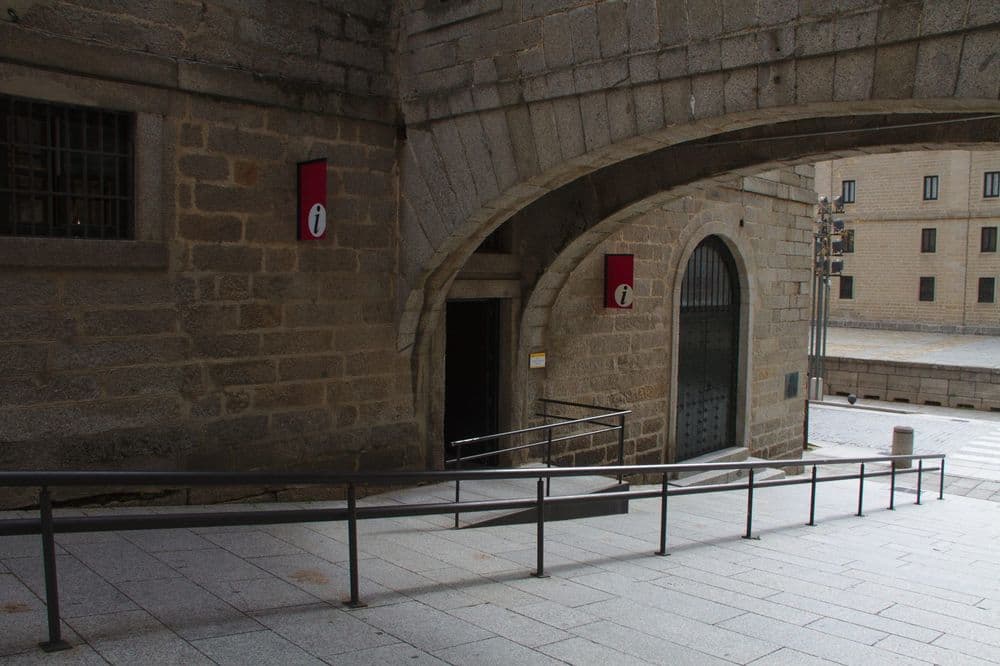
Tourist Office

C/ Grimaldi, 4, 28200 San Lorenzo de El Escorial

Hours:

  • Monday: closed.
  • Tuesday to Saturday: from 10:00 to 14:00 and from 15:30 to 18:00.
  • Sundays: from 10:00 to 15:00.

Web contact

turismo@sanlorenzodeelescorial.org

+(34) 91 890 53 13

National Heritage

patrimonionacional.es

Online bookings and tickets

San Lorenzo Town Hall

San Lorenzo City Council

Tourism of the Community of Madrid

Tourism of the Community of Madrid

Magical Towns of Spain

Magical Villages of Spain

Tour Description

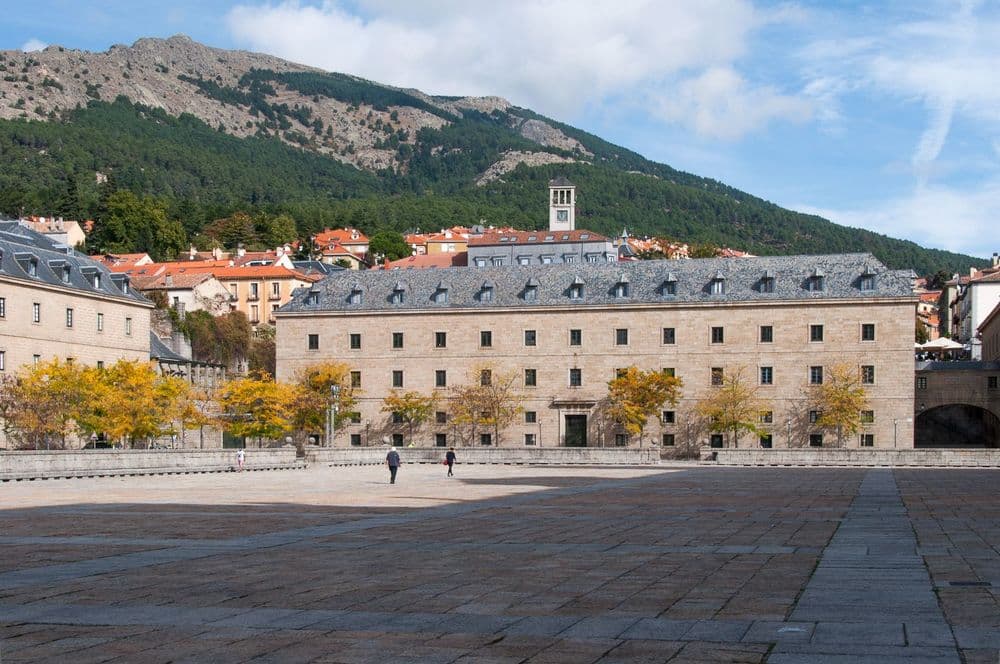
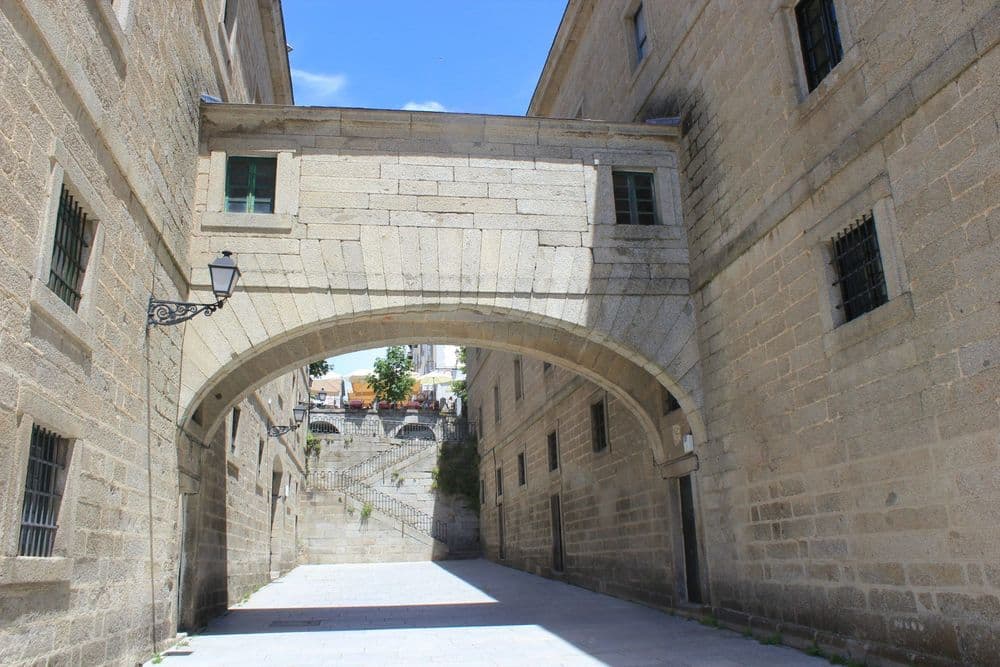
We begin our 18th-century itinerary upon leaving the Tourist Office. If we look at the ground of the Lonja from the doorway, we will see that from the entrance of the Monastery to Grimaldi Street, there is a series of iron vents that indicate the course of the known asMontalvo Mine (1)an underground passage that connected the Monastery with the Second House of Trades, from where, through respective arches—one which we see on Grimaldi Street and another non-existent one over Floridablanca Street from the First House of Trades—one reached theRoyal Colosseum of Charles III (2), building towards which we are heading.

We take the Floridablanca to the right, and find other buildings constructed during this century, such as the so-calledFonda de los Milaneses (3), which corners with San Antón; going up the street we can appreciate the peculiar characteristics of theHouse of D. Francisco Martínez de Sobral (4), known as the House of the Stone Balcony. We descend again to Floridablanca and reach theRoyal Barracks of the Spanish and Walloon Infantries (5).

At the end of Floridablanca Street, we cross the Plaza de la Virgen de Gracia and go down a little along the Estación road. On the left we see theHouse of the Infantes D. Carlos María Isidro and D. Francisco de Paula (6), currently Euroforum Infantes. Optionally we can visit theCasita del Príncipe, or Casita de abajo (21)which is reached via an access point located in front of the building. To do this, we will have to follow a one-kilometre route there (downhill) and another back (uphill).

Retracing the path, from the square we take theRey Street and we find the Cocheras del Rey (7), which houses the Museum of History and Carriages. Opposite this building is another of great relevance known as theHouse of the French Consul (8), first work by the architect Juan de Villanueva in the municipality.

If we go up through Calle Patriarca, we will come across a pedestrian area, Calle Juan de Leyva, where we can observe another work by Juan de Villanueva:the House for rent of the Marqués de Campo Villar (9). We go around the house on its left side and via Santiago Street we reach the Plazuela de Santiago. To the left is the street of Duque de Alba where we find theHouse of the Duke of Arcos, later called de Alba (10). At the end of the street we will go up to see theHouse of the Duke of Medinaceli (11), now rehabilitated. Heading back towards Calle del Rey, we reach the Plaza de San Lorenzo where we find another private dwelling built by Juan Esteban in 1771, theHouse of D. Felipe Díaz Bamonte (12).

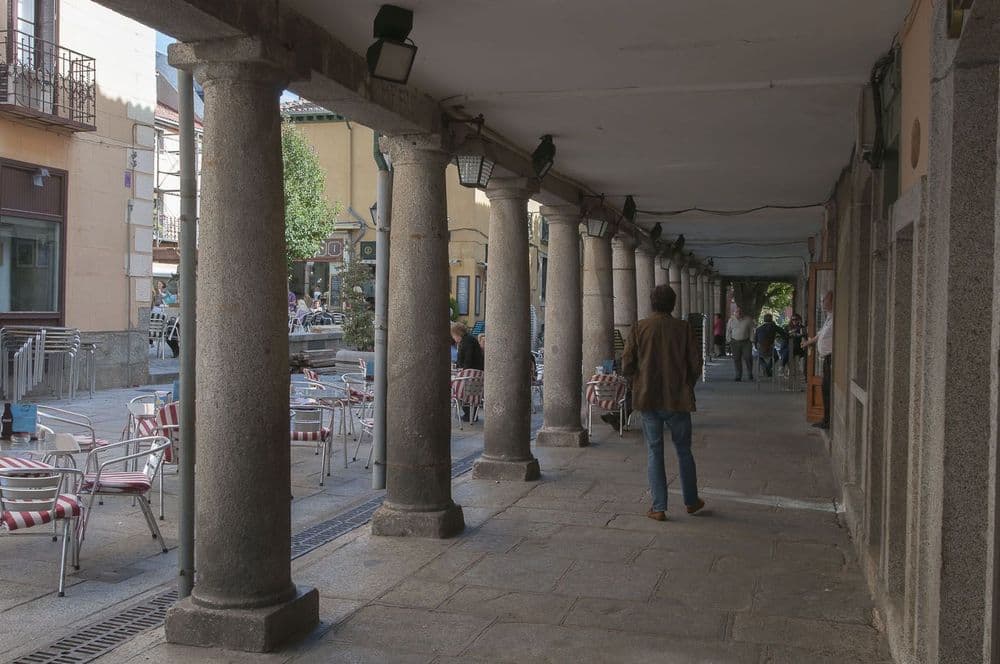
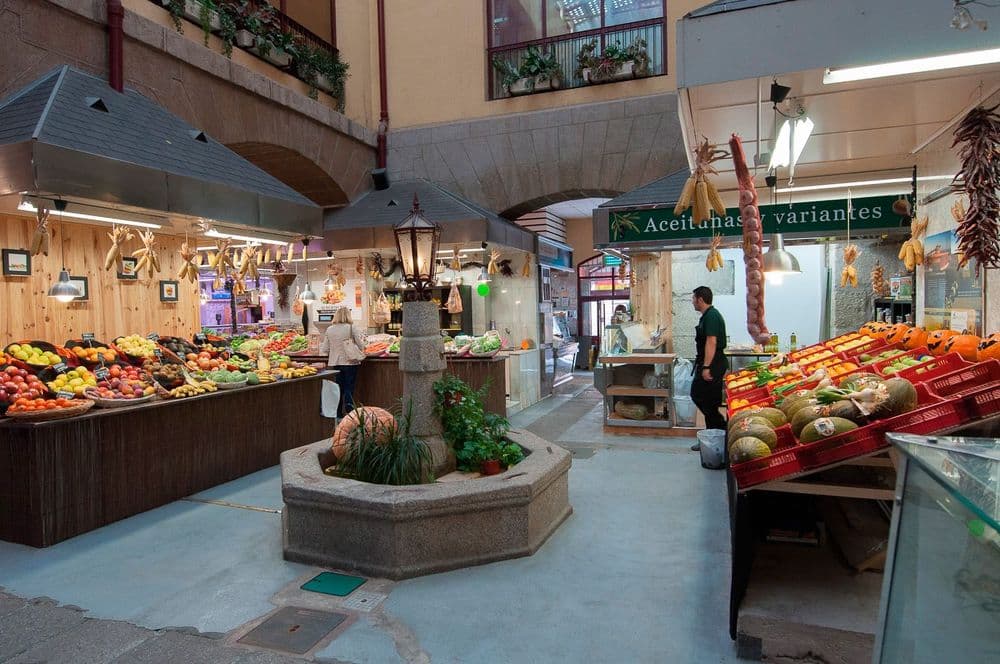
Back on Calle del Rey, we will cross Plaza de San Lorenzo to take Calle Reina Victoria, where we will find theHouse of the Shops or the Columns (13). Later we reach the Plaza de la Constitución, now situated in the centre of the village. From there we go to the calle de las Pozas to admire theCuartel de Inválidos y Voluntarios a Caballo (14). Next to it, in Calle del Rey, is thePublic Market (15), a building that was originally a “Large house for wine storage, grocery shop goods, fish, bacon and other trades”. Currently, nothing remains of the building constructed in 1797.

Further on we reach one of the buildings that has retained its healthcare function to this day: theHospital San Carlos (16). Built by Juan Esteban in 1771, it has now been refurbished.

We go down again to the Plaza de la Constitución and, past the Town Hall, we arrive at Gobernador Street, where we will see the building of theCasa del Alcalde Mayor (17). Further along, in Floridablanca Street, we see theThird House of Trades (18), also called the First Secretary of State. If we continue downwards, along Floridablanca Street, we find some stairs to our right, in Capilla Street, where we descend until we reach the Lonja precinct. Opposite the north facade of the Monastery, to the right, we pass in front of theHouse of the Children and the Queen (19).

The walk through the 18th century that takes us to theCasita del Infante (20)located about 1000 metres from where we are, via Paseo de Carlos III. Finally, you can also visit theCasita del Príncipe (21)heading down towards the town of El Escorial.

Monuments

Events

Routes and trails

How to get here

Accommodations

Restaurants and bars

Family plans

Tourist information

Route stops

20 paradas

Cargando mapa...
Cargando mapa...
1

1. Montalvo Mine

Underground passage running from north to south through the Monastery's Exchange, visible through the grates in the ground of the esplanade, part of the drainage system and historical infrastructure of the Royal Site.

Monument
2

2. Real Coliseo Carlos III

Historic theatre designed by the French architect Jaime Marquet and inaugurated under Charles III, with a programme of opera, theatre and dance that makes it one of the most unique stages in the Community of Madrid.

Monument
3

3. Fonda de los Milaneses

House built before 1773 by the Andión-Pérez couple, one of the oldest lodging establishments in the Royal Site of San Lorenzo de El Escorial, which served visitors during the Royal Days.

Monument
4

4. House of D. Francisco Martínez de Sobral

House built for the First Chamber Physician of King Charles IV, Don Francisco Martínez de Sobral; an 18th-century building that reflects the residential architecture of royal servants in El Escorial.

Monument
5

5. Royal Barracks

A set of three buildings founded in 1717 by Philip V to house new troops in El Escorial, the first Bourbon work in the municipality, integrated into the urban fabric of the Royal Site.

Monument
6

6. Family House of the Infantes D. Carlos María Isidro and D. Francisco de Paula

House designed in 1792 and acquired in 1803 by the Infantes Carlos María Isidro and Francisco de Paula, sons of Carlos IV, an example of the noble residential architecture of the Royal Site.

Monument
7

7. Cocheras del Rey Collection

A set of buildings from 1771 commissioned by Charles III from Juan de Villanueva, which today house a historical collection of royal carriages and period vehicles, located at 41 calle del Rey.

Monument
8

8. House of the French Consul

First architectural work by Juan de Villanueva (1768), designed for the abbé D. Agustín Beliardi, Consul of France, used as a residence during the Royal Days of the Court in El Escorial.

Monument
9

9. House for rent from the Marquis of Campo Villar

House built in 1773 by order of the Marquis de Campo Villar, according to the design of Juan de Villanueva, to be leased during the Royal Days to nobles and courtiers accompanying the king.

Monument
10

10. House of the Duke of Arcos, later of Alba

Building commissioned by the Duke of Arcos, a close gentleman to Charles III, designed by the architect Manuel Machaca Varela, which later became the property of the Duke of Alba.

Monument
11

11. House of D. Felipe Díaz Bamonte

The most outstanding private work of the architect Juan Esteban in El Escorial, with regular proportions and great architectural quality, an example of 18th-century enlightened urbanism in the Royal Site.

Monument
12

12. House of the Shops or of the Columns

Building commissioned by Charles III from Juan de Villanueva to be leased as a block of shops during the Royal Days, with a rectangular floor plan and a porticoed gallery with granite columns.

Monument
13

13. Cuartel de Inválidos y Voluntarios a Caballo

Barracks projected in 1774 and attributed to Juan de Villanueva, which has preserved its original architectural characteristics, built to house the Invalid and Mounted Volunteer troops of the Royal Site.

Monument
14

14. Public Market

Building constructed at the end of the 18th century by the Government of El Escorial as a warehouse for wines and goods, which became the public market of the Royal Site serving the local residents.

Monument
15

15. Hospital San Carlos

Hospital commissioned by Charles III to treat the workers of the Royal Site's construction, one of Spain's first charitable hospitals and an example of the monarch's Enlightenment policy.

Monument
16

16. Mayor's House

House built for Mr. Antonio Vicente Yánez, Mayor of El Escorial appointed in 1771, who was also a member of the Royal Council, an example of 18th-century civil architecture in the Royal Site.

Monument
17

17. Third House of Trades

Building constructed by Juan de Villanueva between 1785 and 1797 by order of Charles III to house the First Secretary of State, the Count of Floridablanca, an example of the late Neoclassicism of the Royal Site.

Monument
18

18. Casa de los Infantes y de la Reina

First major work of the architect Juan de Villanueva (1769), located in the Lonja de Poniente of the Monastery, designed to house the servants and infants of the royal family during the Royal Days.

Monument
19

19. Casita del Infante

Neoclassical palace designed by Juan de Villanueva in 1771 for the Infante D. Gabriel, son of Charles III, located in the Dehesa de La Herrería to the west of the Monastery, with gardens of great beauty.

Monument
20

20. Prince's Little House

Neoclassical palace built between 1771 and 1775 by Juan de Villanueva for the future Charles IV, considered one of the masterpieces of Spanish neoclassicism, with interiors of great artistic refinement.

Monument
App Icon
San Lorenzo AppBetter experience
Abrir
San Lorenzo de El Escorial
What to visitWhat to DoHow to get hereInformationNews and EventsContact
Funded by the European Union NextGenerationEU
Gobierno de España
Recovery, Transformation and Resilience Plan
Comunidad de Madrid
San Lorenzo de El Escorial Town Hall

Official tourism portal of San Lorenzo de El Escorial

Discover San Lorenzo

Plan your Visit

Legal

  • Sitemap

© 2026 Ayuntamiento de San Lorenzo de El Escorial

Other routes

The 18th Century route is an urban tour of San Lorenzo de El Escorial that allows visitors to discover buildings and spaces linked to the Bourbon era of the Royal Site. A low-difficulty historical walk to learn about the architectural and heritage evolution of the municipality.

Distance2 km
Duration2.0 h
DifficultyEasy
Stops0
San Lorenzo de El Escorial
Heritage and Monuments
Nature and Landscapes
Frequently asked questions
Mobility
Where to stay
Where to eat
Sustainable tourism
Legal notice
Data protection
Privacy Policy
Cookie Policy
Accessibility statement