Abrir navegación por teclado

Loading ...

  1. Home
  2. Routes
  3. Loading ...
  4. Loading ...
FacebookInstagram
Route through the 16th century

Route through the 16th century

  1. Home
  2. Routes
  3. Urban Routes
  4. Route through the 16th century
FacebookInstagram

Tourist information

Addresses and contact

Tourist information

Addresses and contact

Tourist Office

C/ Grimaldi, 4, 28200 San Lorenzo de El Escorial

Hours:

  • Monday: closed.
  • Tuesday to Saturday: from 10:00 to 14:00 and from 15:30 to 18:00.
  • Sundays: from 10:00 to 15:00.

Web contact

turismo@sanlorenzodeelescorial.org

+(34) 91 890 53 13

National Heritage

patrimonionacional.es

Online bookings and tickets

San Lorenzo Town Hall

San Lorenzo City Council

Tourism of the Community of Madrid

Tourism of the Community of Madrid

Magical Towns of Spain

Magical Villages of Spain

Tour Description

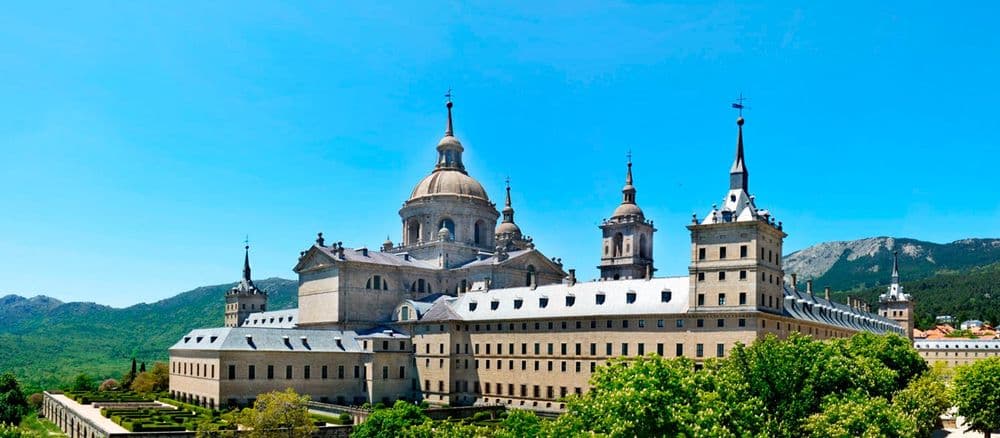
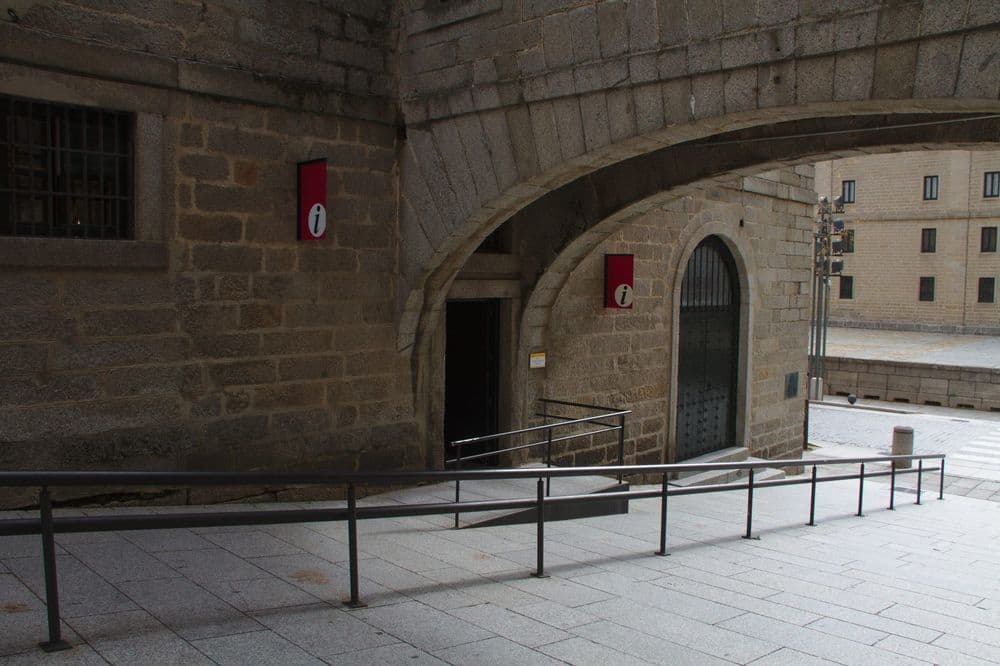
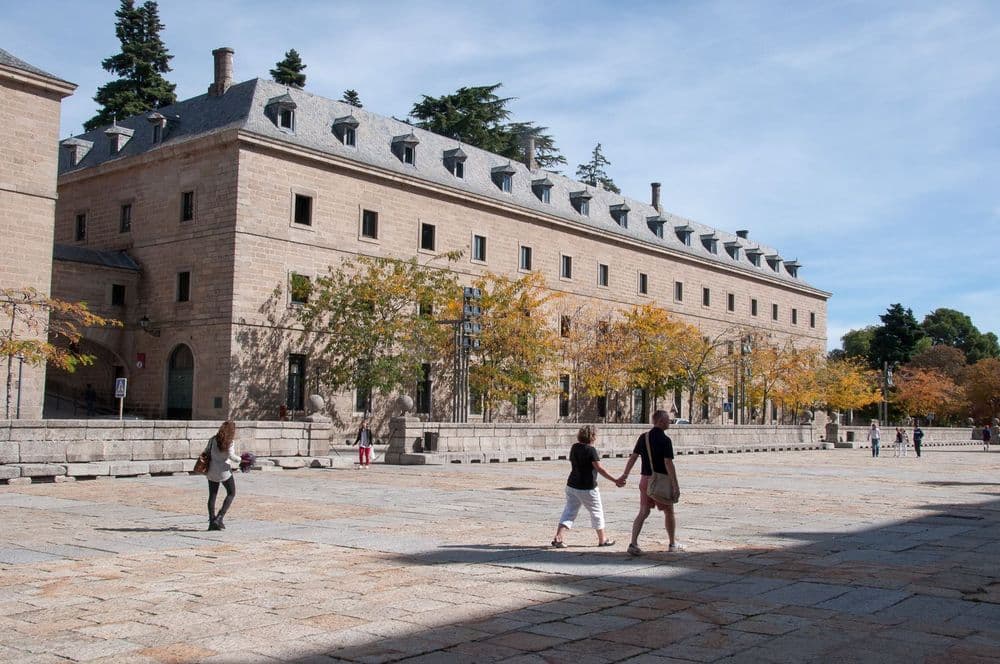
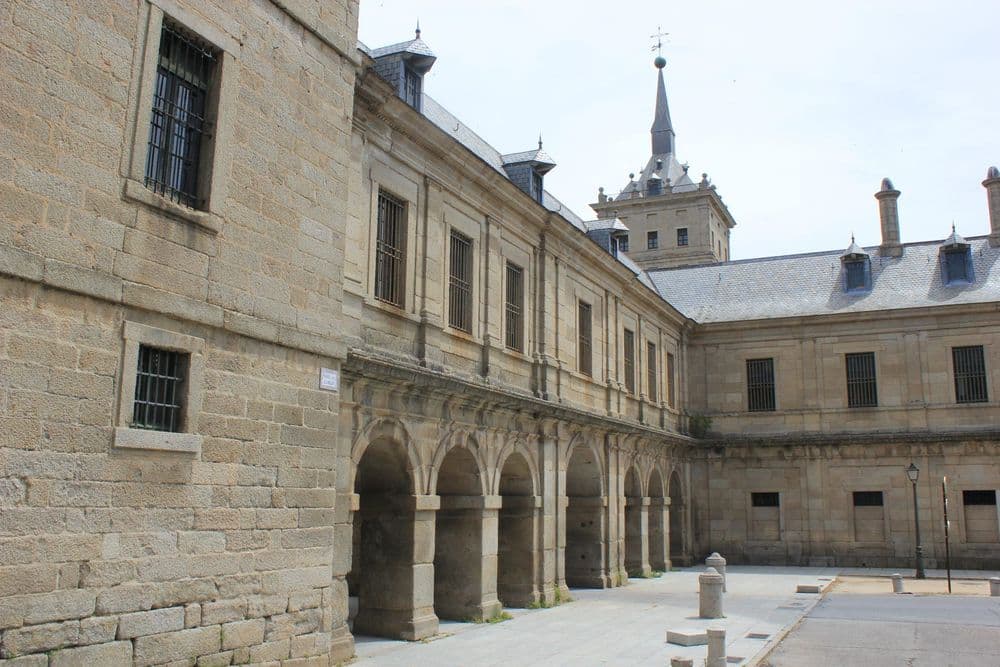
We begin this journey through the 16th century from the Tourist Office, heading towards the vast area known as theMarket(1)delimited by a small wall. Crossing this space, we will reach the north facade of the building where the entrance and the ticket offices of theRoyal Monastery of San Lorenzo de El Escorial (2)that we can visit. Continuing along the facade to the right, we will come across the one known asSanta Teresa Stone (3)located on the corner of the monument.

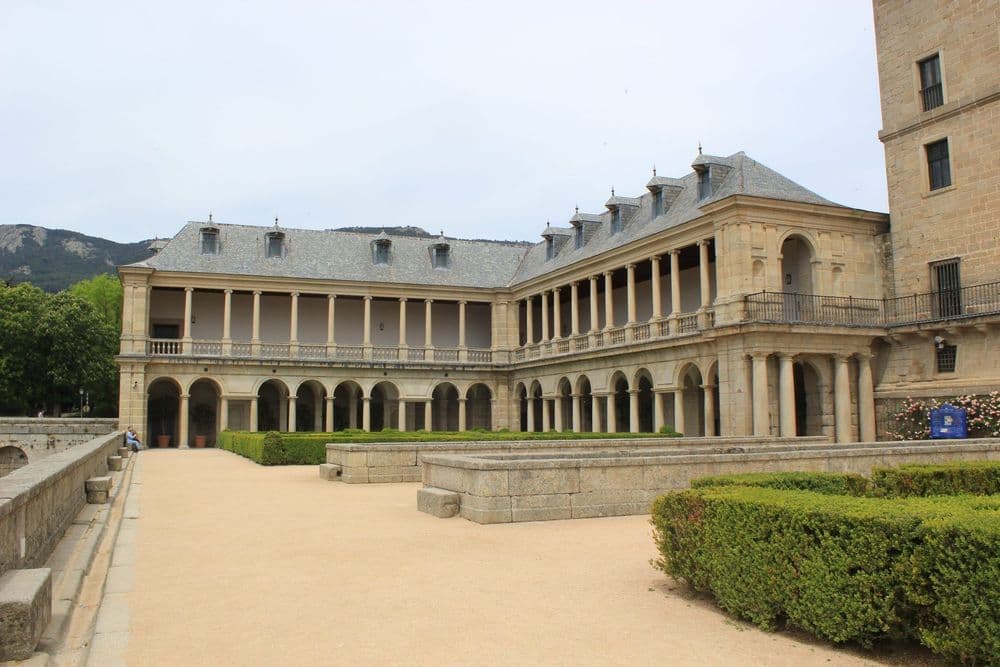
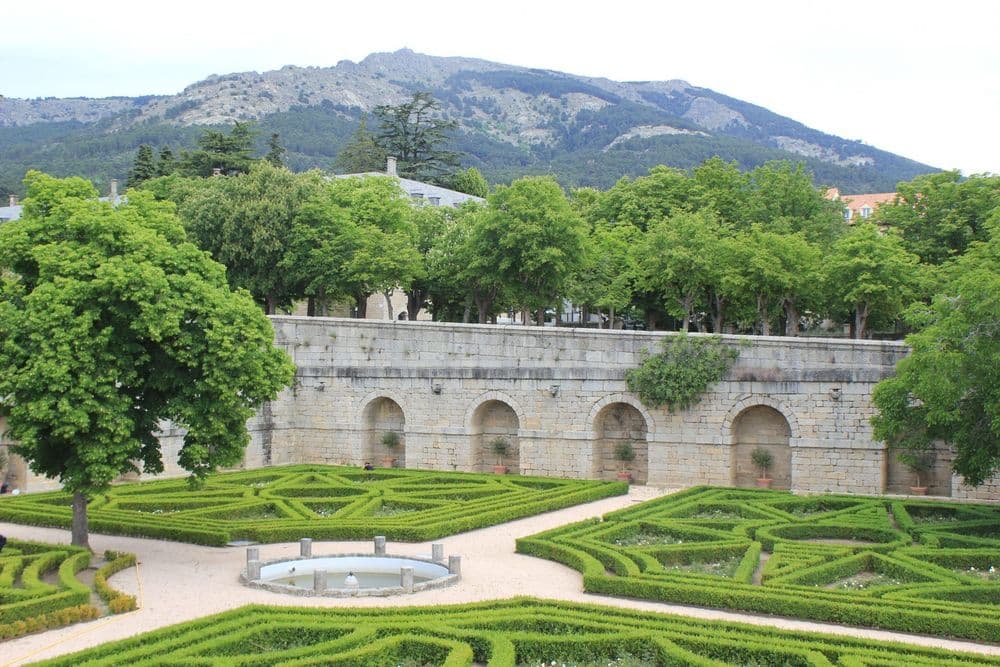
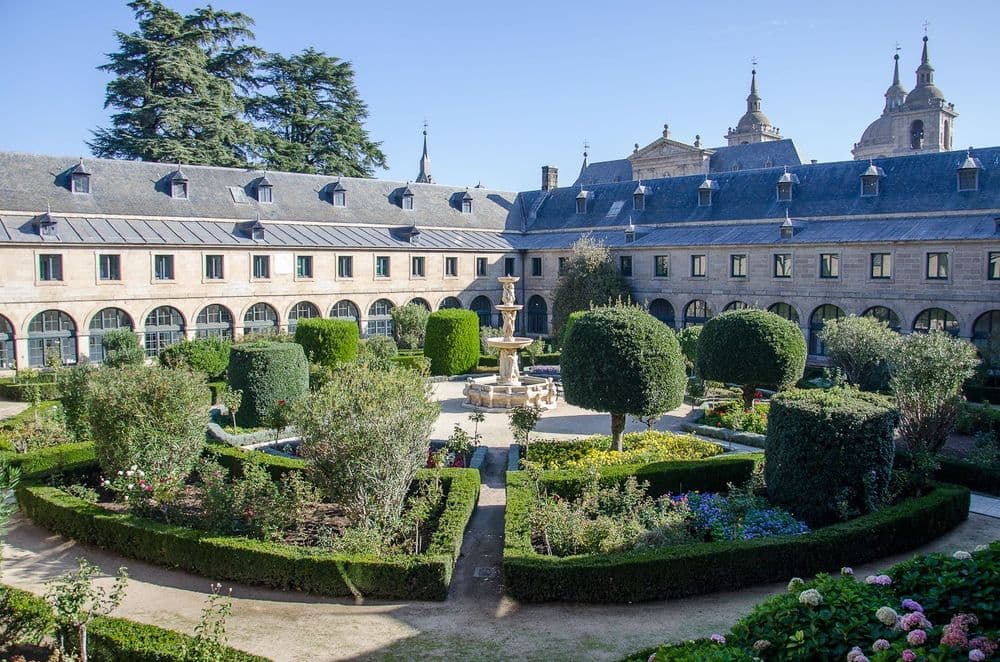
Once on the west facade, we will reach the entrance providing access to theBasilica of the Monastery (4). Upon leaving the building, we will head to the entrance of the market located opposite. After crossing it, we continue to the left to reach theArcos de la Compaña (5). Just below the archway on the left is the access to theJardín de los Frailes (6)which is free access. The building we will enter is the Monastery Pharmacy, whoseConvalescents' Gallery (7)we can appreciate from the gardens. The gardens have extraordinary views. To the right we find thepond (8)in which water accumulates to irrigate the Huerta de losFrailes (9)located below. If we look to the right, we will also see the building of theSnow Well (10).

Upon leaving the gardens to the left we will arrive at aviewpoint (11)where is it recommended to photograph the south facade of the Monastery with the gardens at its feet from.

If we go back a little towards the arches and walk up Paseo de los Alamillos, we will reach the Casa de laCompany (12), currently Real Centro Universitario Escorial-María Cristina, in front of which is Adolfo Suárez Park. On the other side of the park are two columns that announce the entrance to theBlacksmith's Forest (13)which we can stroll through following a small circular itinerary.

Arriving again at the access point, we will take Leandro Rubio street, the main axis of the beautiful neighbourhood ofThe Squad (14), which takes its name from the tree plantation that Philip II had ordered to be created, with species such as holm oaks, chestnuts, oaks and hazelnuts.

At the end of Leandro Rubio street and taking Floridablanca street, to our left is the one known asCasa de Jacometrezo (15), the oldest in the town. This stone construction dates back to the beginning of the Monastery's works. Located right at the edge of the Plantel, it will be the residence of the Italian sculptor Jacomo da Trezzo.

If we go down Floridablanca street, on the right, through some windows we can see beautiful ruins covered in vegetation that climbs up the enormous chimneys left on the exterior of what was theCasa de las Pizarras (16), located at the corner of the Lonja and which was the home of the King's kitchen porter, the servants and the convent's straw-plaiter. Further on, already in the Plaza de la Constitución and on the corner with Floridablanca, we find, theCasa de los Doctores (17).

If we continue along Floridablanca Street, to the right, we will find the Houses of Trades. First, we will see theSecond House of Trades (18), where the Sanctuary of Ntra. Sra. de la Virgen de Gracia is located, Patroness of the city in whose honour a Romería, declared a Fiesta de Interés Turístico Nacional, is celebrated on the second Sunday of September. Further down, crossing Grimaldi Street, we will reach theFirst House of Trades (19)which houses various Exhibition Rooms and an assembly hall for holding different types of events.

Monuments

Events

Routes and trails

How to get here

Accommodations

Restaurants and bars

Family plans

Tourist information

Route stops

14 paradas

Cargando mapa...
Cargando mapa...
1

1. Lonja del Monasterio

Large granite stone esplanades that surround the Royal Monastery along its north and west facades, a monumental space that enhances the majesty of the architectural complex and provides access to its main entrances.

Monument
2

2. Royal Monastery of San Lorenzo de El Escorial

Late Renaissance masterpiece built between 1563 and 1584 by Juan de Herrera for Philip II, integrating a palace, temple, royal pantheon, convent, college and library. Declared a UNESCO World Heritage site in 1984.

Monument
3

3. Piedra de Santa Teresa

Stone block on the corner of the Monastery's Cloister where tradition claims that Saint Teresa of Avila stopped to rest during one of her visits to the Royal Site, a symbol of popular devotion.

Monument
4

4. Basilica of the Monastery

Majestic basilica of the Royal Monastery of El Escorial, accessed through the Patio de los Reyes. Its facade, flanked by two towers, is one of the icons of the 16th-century Herrerian style.

Monument
5

5. Jardín de los Frailes

Historic garden next to the south wing of the Royal Monastery, with panoramic views over the monumental complex, the orchards and the valley. Designed with formal parterres, it is one of the most peaceful spaces of the Royal Site.

Nature
6

6. Convalescents' Gallery

Building constructed in 1585 as the pharmacy and medical service of the Monastery, organised around a three-storey rectangular courtyard, today one of the most unique parts of the monumental complex.

Monument
7

7. Pond

Historic pond built to regulate the water intended for the irrigation of the Monastery's orchards, according to the designs of Francisco de Mora, on the site where the ancient Blasco Sancho spring flowed.

Monument
8

8. Huerta de los Frailes

Historical vegetable garden of the Monastery surrounded by a large stone wall of 8,000 feet, considered by Friar José de Sigüenza as the best land for many leagues, with gardens and crops since the 16th century.

Nature
9

9. Snow Well

Historic well built to store snow collected in winter in the mountains and preserve it during the summer to provide fresh drinks and food for the Court and the residents of the Royal Site.

Monument
10

10. Casa de la Compaña

Building constructed between 1590 and 1597 according to the project of Francisco de Mora, a disciple of Herrera, to house all the storage and services of the Royal Monastery and University of the Real Sitio.

Monument
11

11. Access to the Smithy Forest

Entrance to the Bosque de La Herrería through the historic columns, access to this National Heritage protected space with several signposted itineraries among pedunculate oaks and ash trees.

Nature
12

12. Casa de las Pizarras

Historic building of the Royal Site of San Lorenzo de El Escorial characterized by the use of slate on its roofs, an emblematic material of 16th-century Herrerian architecture.

Monument
13

13. Second House of Trades

Second of the houses of the Trades designed by Juan de Herrera, part of the unitary complex built in the 16th century to expand the dependencies of the Royal Monastery outside its precinct.

Monument
14

14. First House of Trades

The first of the buildings conceived by Juan de Herrera to house the palace facilities of the Royal Site, built in the 16th century next to the Monastery to complete the monumental complex.

Monument
App Icon
San Lorenzo AppBetter experience
Abrir
San Lorenzo de El Escorial
What to visitWhat to DoHow to get hereInformationNews and EventsContact
Funded by the European Union NextGenerationEU
Gobierno de España
Recovery, Transformation and Resilience Plan
Comunidad de Madrid
San Lorenzo de El Escorial Town Hall

Official tourism portal of San Lorenzo de El Escorial

Discover San Lorenzo

Plan your Visit

Legal

  • Sitemap

© 2026 Ayuntamiento de San Lorenzo de El Escorial

Other routes

Tour of 16th-century San Lorenzo, from the Lonja and the Royal Monastery to its gardens, historic houses, and spaces linked to Philip II.

Distance1.6 km
Duration1.5 h
DifficultyEasy
Stops0
San Lorenzo de El Escorial
Heritage and Monuments
Nature and Landscapes
Frequently asked questions
Mobility
Where to stay
Where to eat
Sustainable tourism
Legal notice
Data protection
Privacy Policy
Cookie Policy
Accessibility statement