Abrir navegación por teclado

Loading ...

  1. Home
  2. Routes
  3. Loading ...
  4. Loading ...
FacebookInstagram
La Herrería - El Castañar – Philip II's Chair

La Herrería - El Castañar – Philip II's Chair

  1. Home
  2. Routes
  3. Nature Environment
  4. La Herrería - El Castañar – Philip II's Chair
FacebookInstagram

Tourist information

Addresses and contact

Tourist information

Addresses and contact

Tourist Office

C/ Grimaldi, 4, 28200 San Lorenzo de El Escorial

Hours:

  • Monday: closed.
  • Tuesday to Saturday: from 10:00 to 14:00 and from 15:30 to 18:00.
  • Sundays: from 10:00 to 15:00.

Web contact

turismo@sanlorenzodeelescorial.org

+(34) 91 890 53 13

National Heritage

patrimonionacional.es

Online bookings and tickets

San Lorenzo Town Hall

San Lorenzo City Council

Tourism of the Community of Madrid

Tourism of the Community of Madrid

Magical Towns of Spain

Magical Villages of Spain

Tour Description

The area traversed by this route is part of the Natura 2000 Network, as it is included in the Site of Community Interest “Cuenca del Río Guadarrama”. The natural and landscape values of La Herrería have survived to the present day because it is a property belonging to National Heritage, not sold during the Disentailment of crown assets in the final third of the 19th century.

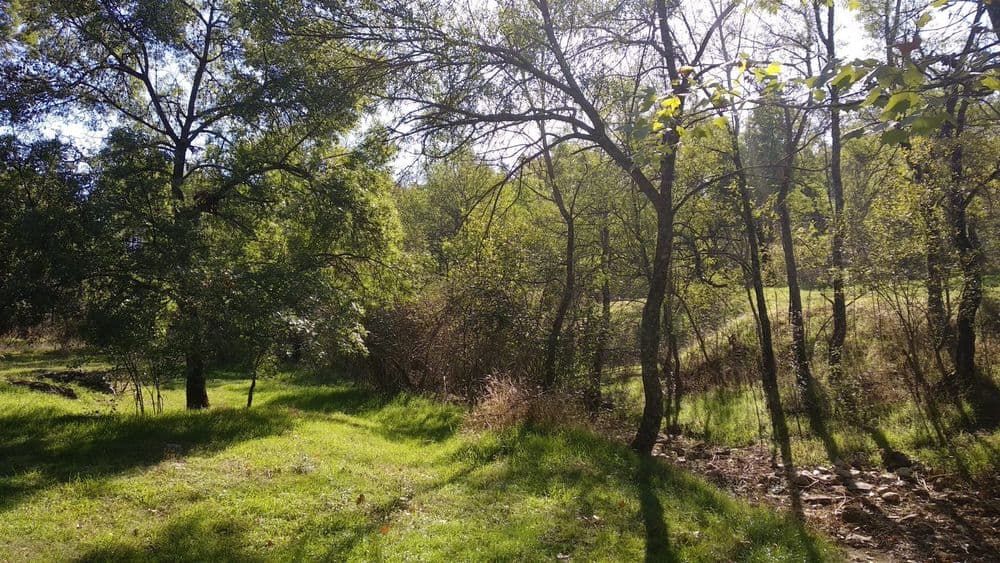
In the itinerary, we will enjoy four perfectly distinguishable habitats: the thermophilous ash groves of Fraxinus angustifolia, the Galician-Portuguese oak forests of Quercus robur and Quercus pirenaica, the Castania sativa forest, and the gallery forests of Salix alba and Populus alba. It also passes through the Monastery and Site of El Escorial, which was declared a UNESCO World Heritage site in 1982.

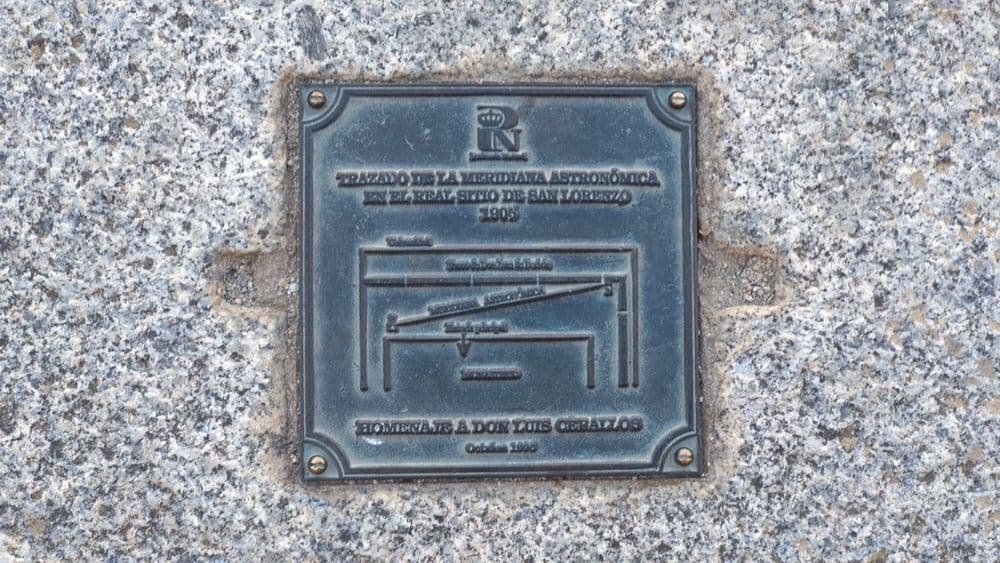
We start the route at theTourist office (1). Walking down Grimaldi Street, we come face to face with the magnificent Royal Monastery of San Lorenzo de El Escorial (1563-1584). We cross the wall that delimits the Lonja. To the right are the buildings that frame it: the First and Second Trade Houses (1587-1596), the House of the First Secretary of State or Third Trade House (1785-1797) and opposite the House of the Infante and the Queen (1770-1776). On the parapet of the Lonja wall aplaque commemorates the meridian traced by Luis Ceballos Medrano in 1905 (2)which is complemented by another located to the left of the entrance of theConvent (3). The imaginary line joining them points north and indicates that the orientation of the Royal Monastery does not exactly coincide with the cardinal points (12º northeast declination).

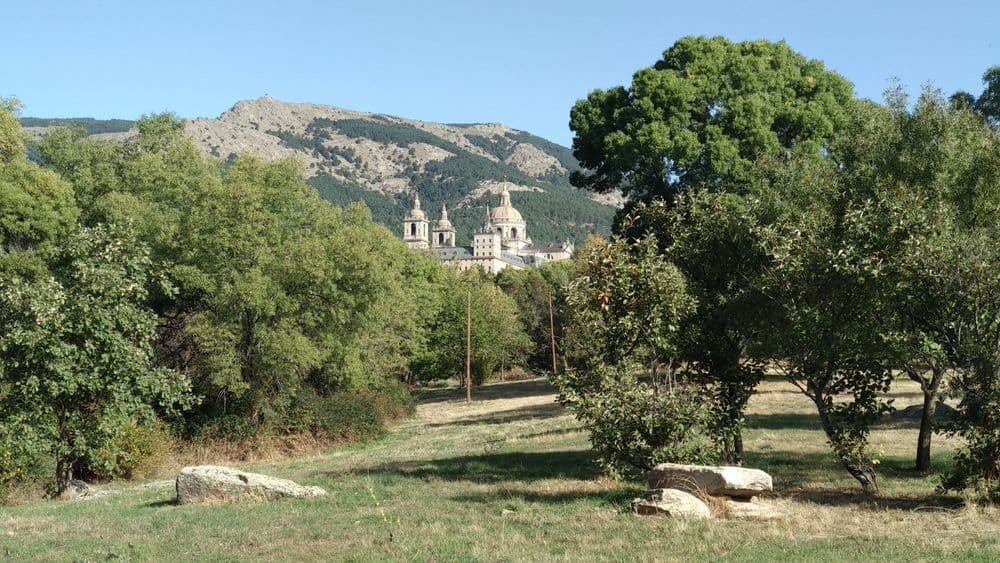
Opposite the Casa de la Compañía (1590-1597), today the Real Centro Universitario Escorial – María Cristina, it joins the Botica through a building composed ofArches (4)under which is the entrance to the Jardín de los Frailes (free access, closed Mondays). Further on aviewpoint (5)it rewards us with fantastic views of the Royal Monastery, the Garden, the Orchards and the Pond. The Madrid city skyline can also be seen on clear days.

Facing the viewpoint, abronze statue of Philip II (6), suggests visiting the Adolfo Suarez Park – RCU Escorial-María Cristina (closed Mondays), where we find aSabina de Virginia (7)and two copies ofCentenary Horse Chestnuts (8)which are Singular Trees of the Community of Madrid (hereinafter AS). We exit through the opposite door and cross Paseo Carlos III with great care. Following the alignment of Horse Chestnuts, we reach thetwo access columns (9)to the Herrería area, declared a Picturesque Landscape in 1961 along with the Pinar de Abantos.

We go down the Cuesta de los Pastores and, at the first fork, continue along the path on the right which leads us to theSeminar Source (10), one of the numerous stone fountains carved below ground level that dot La Herrería. There we find a board with the representative birds and a Kiosk with a set of interpretive panels of La Herrería (visible during opening hours).

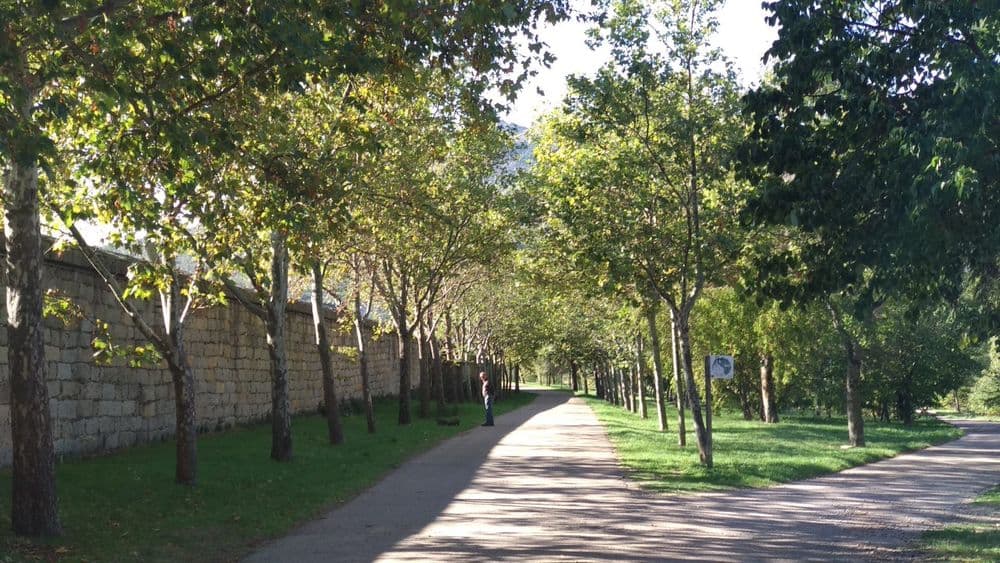
A blue arrow indicates the path leading to the beautiful specimen of theLove tree (11)which is at the intersection with the Cuesta de los Pastores, which we follow until we cross the stone bridge, from which we will see an alignment ofShade bananas (12)and to its right theReal Club de Golf La Herrería (13). Asignal (14)suggests the proximity of the Fountain of theCapones (15)and a little further on, theCruz de los Romeros (16)indicates that the Procession accompanying the Virgen de Gracia, patron saint of San Lorenzo de El Escorial, passes through here on its way to the Hermitage.

On the Bridge over theArroyo del Batán (17)we appreciate the landscape diversity of the gallery forest created along its banks, where we find poplars, willows, ashes, rosaceous plants, brambles and thorns. A fence warns that we are entering a vehicle circulation area towards a parking area. Attentive, we cross theM-505 for zebra crossing (18). The road forks, presided over by anotherCruz de los Romeros (19). We take a right. We find a diversion to the left that leads to theErmita de la Virgen de Gracia (20)and to theErmita Spring (21).In this environment, every second Sunday of September, the Romería de la Virgen de Gracia is celebrated, a Festival of National Tourist Interest since 1988, where the people of Gurrieta pay tribute to their patron saint, while dancing the rondón to the rhythm of their dulzainas.

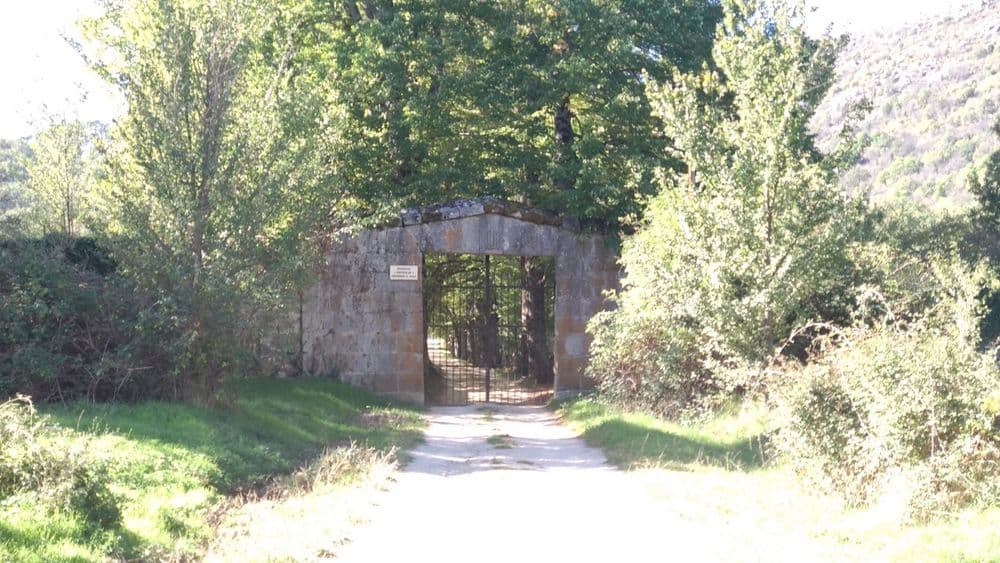
We followed the path we had come along and reached themain gate of the El Castañar estate (22), from which the tree-lined promenade that runs almost its entire length can be seen. Inside was a 13th-century church in honour of the Virgin of la Herrería, patron saint of the municipality of El Escorial, which was moved to the Church of San Bernabé at the end of the century, before the building was destroyed in the times of Philip II. We retrace our steps to thefence (23)which now remains to our left. The narrow path we took isfork (24). We take the left and begin a slight ascent parallel to the wall of El Castañar and leave behind aestate service gate (25).

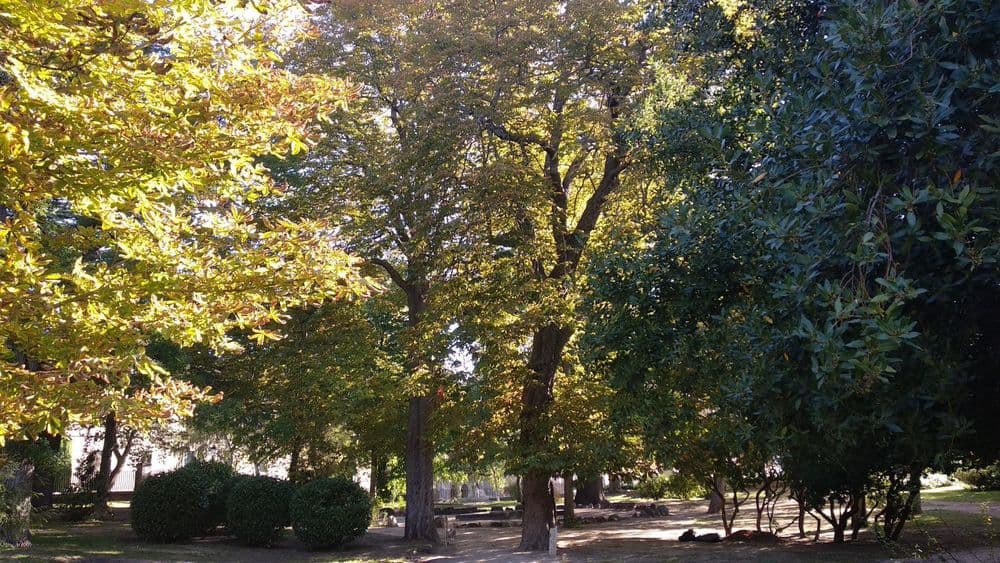
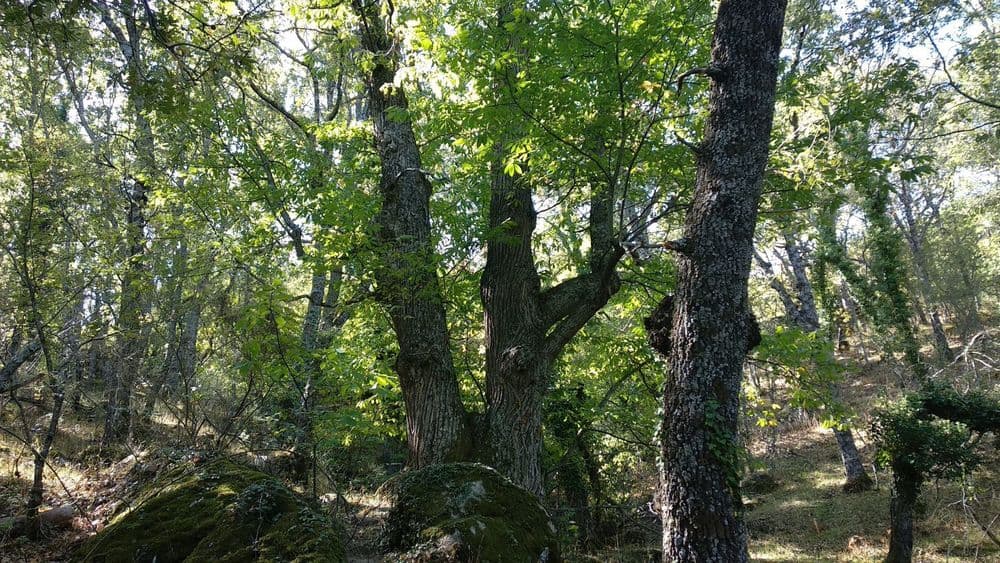
Now in thepaved track (26)we go to the left until we reach theQueen's Fountain (27), located in a fantastic chestnut grove in which stand outtwo copies of AIS (28 and 29), near the intermittent stream coming from the mountain, Montpellier maples and Pyrenean oaks. Here also begins the adapted and accessible “Ecological Path” that runs along the forest track to the Silla de Felipe II. We continue along it until aposter (30)opposite the well-knownTilo de la Mano (31), behind the stone wall of El Castañar, which is missing two of the five branches that gave it its name.

We continue and leave the fountain of the on the leftDos Hermanos (32)and theCueva del Oso (33),place to spark the imagination of the little ones.To theright a path (34)it leads us to a new fork with a fence through which we continue. From there, we see the dry stone wall that will accompany us on the right and which delimits the Historical Territory of Philip II, declared a Heritage Site (Bien de Interés Cultural) by the Community of Madrid in 2006, which covers practically all of the municipalities of San Lorenzo de El Escorial and El Escorial. We continue along the left path until the ruin of theCasa del Sordo (35), a 16th-century gamekeeper's lodge. From there, we can see the fantastic views of the surrounding El Escorial area and our next destination: thePhilip II's Chair (36), which we reach via one of the paths that end there, where, according to tradition, Philip II used to contemplate the progress of the works of the Royal Monastery and which, recently, it is suggested could be a Vetton altar.

We climbed the stone-carved steps to photograph the magnificent panoramic view and sit where it is believed Philip II appreciated the progress of the works of the Royal Monastery. Beside it, a beautifulMontpellier Maple (AIS) (37)and, beyond, a greatgranite boulderwhich remains balanced on anotherrock(38).

We descend through the thicketmelojo oak forest (39), accompanied by Montpellier maples, junipers, butcher's brooms and spurges, and we leave behind theArenitas Spring (40)and theSource of Prosperity (41). The path leads us to the Silla road which we already know. We cross the M-505 again via thezebra crossing (42). When crossing Puente del Arroyo del Batán, in thefork (43), we take a right and pass in front of theSanta María del Buen Aire Hostel (44).We take a small path that goes off to the right and after crossing a wooden footbridge we arrive atan ash (45) and Pyrenean oak grove,with shrubs such as sloes, middens, blackberries, and wild roses. To the left, off the path we spot a majesticfresno declared AIS (46). We continue until Calleja Larga. To the left we will leave aCasa del Guarda (47)and to the right a hidden tombstone that is part of the wall of theCasita del Príncipe (48).

At the end of Calleja we find theentries to the Bosquecillo del Real Monasterio (49)to the left, not accessible to the public and of the coquetaCasita del Príncipe (50)to the right with its park and court gardens. Heading towards the Royal Monastery, we stop at thesmall balcony (51)from which we appreciate the King's and Queen's Gardens, before finishing our tour.

Monuments

Events

Routes and trails

How to get here

Accommodations

Restaurants and bars

Family plans

Tourist information

Route stops

44 paradas

Cargando mapa...
Cargando mapa...
1

1. Astronomical meridian

Astronomical meridian line traced in 1905 by D. Luis Ceballos Medrano in the Lonja of the Royal Monastery, used to determine the geographical orientation of the Royal Site of El Escorial.

Monument
2

2. Statue of Philip II

Sculpture representing King Philip II, founder of the Royal Monastery of San Lorenzo de El Escorial, located in a prominent position along the routes through the Royal Site as a tribute to the builder monarch.

Monument
3

3. Sabina de Virginia

Specimen of Eastern Red Cedar (Juniperus virginiana), a North American species introduced to the historic gardens of the Royal Site, a unique tree due to its rarity in the natural environment of the Madrid mountain range.

Nature
4

4. Horse Chestnut I and II

Two notable specimens of horse chestnut (Aesculus hippocastanum) located in the Royal Forests, an ornamental species introduced to the gardens and parks of the Royal Site during the 18th century.

Nature
5

5. Access columns to the Blacksmith

Historic columns marking the entrance to the Forest of La Herrería, a protected area of great ecological value that is home to Pyrenean oaks, ash trees and numerous species of Iberian fauna.

Monument
6

6. Seminar Source

Historical source and interpretation centre located next to the La Herrería Forest, which provides information on the natural values and landscape heritage of the Royal Site of San Lorenzo de El Escorial.

Monument
7

7. Tree of Love

Specimen of Judas tree (Cercis siliquastrum) found in the gardens or parks of the Royal Site of San Lorenzo de El Escorial, striking for its deep pink spring flowering.

Nature
8

8. Shade bananas

Large specimens of London plane trees (Platanus × hispanica) located in the Los Llanillos recreational area, noted for their impressive span and the cool canopy they project in summer.

Nature
9

9. Real Club de Golf la Herrería

Golf club located in the La Herrería Forest, integrated into the protected landscape of the Royal Site of San Lorenzo de El Escorial, with an 18-hole course surrounded by ash and Pyrenean oak trees.

Monument
10

10. Fuente de los Capones Diversion

Optional detour from the main path leading to the Fuente de los Capones, a historic spring located on the slopes of Mount Abantos, a fresh water point on the mountain routes.

Monument
11

11. Fuente de los Capones

Historical spring on the slopes of Mount Abantos, accessible via an optional detour from the main path, featuring fresh water and a natural environment of great mountain beauty.

Monument
12

12. Cruz de los Romeros

Cross located on the historic path connecting San Lorenzo de El Escorial with the Valley of the Fallen, a landmark on the route through La Herrería and El Castañar towards the Silla de Felipe II.

Monument
13

13. El Batán Stream Gallery Forest

Characteristic plant formation bordering the Arroyo de El Batán in the Bosque de La Herrería, with ash and willow trees forming a dense green corridor following the watercourse.

Nature
14

14. M-505 crossing

Crossing point with the M-505 road on the routes through Mount Abantos and the Malagón Pass, a reference for orientation on the way to the Luis Ceballos Arboretum or the San Juan Pass.

Monument
15

15. Hermitage of Nuestra Señora de la Virgen de Gracia

Small historic hermitage dedicated to the Virgin of Gracia located in the Royal Forests of San Lorenzo de El Escorial, a point of popular devotion and a reference on the routes through La Herrería and El Castañar.

Monument
16

16. Fuente de la Ermita

Historic fountain located next to the hermitage of the Royal Forests of San Lorenzo de El Escorial, a point of fresh water and rest on the routes through La Herrería and the surroundings of the Royal Site.

Monument
17

17. Finca El Castañar

Historic estate of the Royal Forests of San Lorenzo de El Escorial that preserves a beautiful forest of chestnut and hornbeam trees, declared a protected area within the Natura 2000 Network.

Monument
18

18. Fence

Fence or hedge that delimits the historical lands of the Royal Forests of San Lorenzo de El Escorial, used as a reference on routes through Mount Abantos to orient oneself and stay on the correct path.

Monument
19

19. Diversion. Take the left.

Route sign indicating the turn to the left on the tour through the Reales Bosques, a key orientation point on the itinerary through the trails of Mount Abantos.

Monument
20

20. Service door of El Castañar

Service entrance to the Finca El Castañar, a protected natural area with chestnut and melojo forests integrated into the Natura 2000 Network and the Royal Forests of San Lorenzo de El Escorial.

Monument
21

21. Access to the forest track

Route sign indicating access to the forest track on the left, a key reference to avoid losing the way on the itinerary through Mount Abantos towards the higher points of the route.

Nature
22

22. Chestnut Forest in la Fuente de la Reina

Chestnut grove (Castanea sativa) located next to the Queen's Fountain in the Forest of La Herrería, one of the few stands of this species present in the surroundings of the Royal Site.

Nature
23

23. Castaño I

Unique specimen of chestnut (Castanea sativa) present in the Royal Forests of San Lorenzo de El Escorial, a species that was historically cultivated to take advantage of its fruits in the Royal Site.

Nature
24

24. Chestnut

Specimen of sweet chestnut (Castanea sativa) present in the Royal Forests or gardens of San Lorenzo de El Escorial, a large tree with ornamental and historical value in the surroundings of the Royal Site.

Nature
25

25. View of El Tilo de la Mano

Viewpoint from which the imposing Tilo de la Mano can be seen in perspective, one of the most unique trees of the Royal Site, with its characteristic branches resembling the fingers of an outstretched hand.

Nature
26

26. Tilo de la Mano

Centenary specimen of lime tree (Tilia platyphyllos) of great span located in the gardens of the Royal Site, a singular tree whose shape resembles an outstretched hand and which gives its name to several viewpoints in the area.

Nature
27

27. Dos Hermanos Fountain

Historic double-spout fountain in the Royal Forests of San Lorenzo de El Escorial, so named for its two adjacent springs, a resting point on the routes through the natural surroundings of the Royal Site.

Monument
28

28. Bear Cave

Natural rock formation on the slopes of Mount Abantos that creates a granite cave or shelter, a point of geological interest on the routes through the Sierra de San Lorenzo de El Escorial.

Nature
29

29. Detour towards the Fence of Philip II's Historic Territory

Fork in the path that allows access to the Great Royal Fence of Philip II, the historic granite stone wall that delimited the lands of the Royal Forests during the 16th century.

Monument
30

30. House of the Deaf

Historic service building located in the Royal Forests of San Lorenzo de El Escorial, a landmark on some routes through Mount Abantos and the El Castañar estate.

Monument
31

31. Árce de Montpellier

Specimen of Montpellier maple (Acer monspessulanum) present in the La Herrería Forest, one of the tree species that coexists with pedunculate oaks and ash trees in this protected area.

Nature
32

32. Granitic boulder

Natural granite geological formation with a rounded shape, resulting from the differential erosion of the granitic rock characteristic of the Sierra de Guadarrama, visible on the routes through Monte Abantos.

Monument
33

33. Melojo oak

Specimen of Pyrenean oak (Quercus pyrenaica), the dominant species in the Forest of La Herrería and the Chestnut Grove, an emblematic tree of the mountain pine forests of the Royal Site of San Lorenzo de El Escorial.

Nature
34

34. Sandstones Fountain

Historical spring of the Royal Forests of San Lorenzo de El Escorial, one of the numerous springs that emerge on the slopes of Mount Abantos and feed the mountain streams.

Monument
35

35. Source of Prosperity

Historical fountain of the Royal Forests of San Lorenzo de El Escorial, with an allegorical name reflecting the abundance of water in the mountain range, a resting point on the routes through Mount Abantos.

Monument
36

36. Deviation to the right

Route signage indicating the right turn on the journey through the Royal Forests, an essential reference for following the correct itinerary without getting lost at the path's forks.

Monument
37

37. Santa María del Buen Aire Hostel

Former shelter and hostel located on the slopes of Mount Abantos, which served as a resting point for hikers and pilgrims travelling along the paths of the Sierra de Guadarrama.

Monument
38

38. Dehesa de Fresnos

Natural dehesa area with a predominance of narrow-leafed ash (Fraxinus angustifolia) in the Bosque de La Herrería, a priority habitat of the Natura 2000 Network that hosts a rich diversity of flora and fauna.

Nature
39

39. Fresno de la Herrería

Notable specimen of ash (Fraxinus angustifolia) located in the Bosque de La Herrería, representative of the dominant species in the dehesa of this emblematic forest of the Real Sitio.

Monument
40

40. Guard's house

Historic service building where the forest guards in charge of the surveillance and management of the Royal Forests resided, present in several routes through the natural surroundings of the Royal Site.

Monument
41

41. Commemorative headstone

Stone plaque or headstone commemorating a historical event or relevant person in the Royal Forests of San Lorenzo de El Escorial, a testament to the rich historical heritage of its trails.

Monument
42

42. Access gate to the Bosquecillo

Entrance to the Bosquecillo, a small forest within the Royal Gardens or historical grounds of the Royal Site of El Escorial, a stopping point on the routes through the historical gardens.

Monument
43

43. Entrance to the Little Prince's House

Access to the park and gardens of the Casita del Príncipe, a neoclassical building commissioned by Charles III for the future Charles IV, located in the Bosque de La Herrería.

Monument
44

44. Historic gardens

Viewpoint with privileged views over the King's and Queen's Gardens of the Royal Monastery of San Lorenzo de El Escorial, from where the monumental complex and the historic gardens can be seen in their entirety.

Nature
App Icon
San Lorenzo AppBetter experience
Abrir
San Lorenzo de El Escorial
What to visitWhat to DoHow to get hereInformationNews and EventsContact
Funded by the European Union NextGenerationEU
Gobierno de España
Recovery, Transformation and Resilience Plan
Comunidad de Madrid
San Lorenzo de El Escorial Town Hall

Official tourism portal of San Lorenzo de El Escorial

Discover San Lorenzo

Plan your Visit

Legal

  • Sitemap

© 2026 Ayuntamiento de San Lorenzo de El Escorial

Other routes

Natural route through La Herrería, El Castañar and the Silla de Felipe II, a journey through forests, springs, viewpoints and historical landscapes next to the Monastery of San Lorenzo de El Escorial.

Distance8.6 km
Duration2.8 h
DifficultyMedium
Stops0
San Lorenzo de El Escorial
Heritage and Monuments
Nature and Landscapes
Frequently asked questions
Mobility
Where to stay
Where to eat
Sustainable tourism
Legal notice
Data protection
Privacy Policy
Cookie Policy
Accessibility statement