National Heritage
San Lorenzo Town Hall
Tourism of the Community of Madrid
Magical Towns of Spain
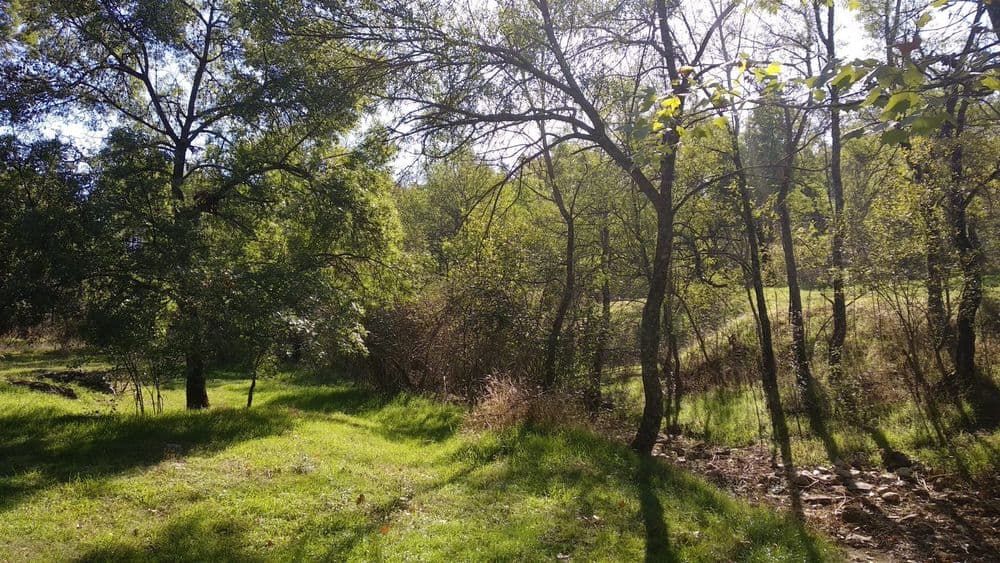
The area traversed by this route is part of the Natura 2000 Network, as it is included in the Site of Community Interest “Cuenca del Río Guadarrama”. The natural and landscape values of La Herrería have survived to the present day because it is a property belonging to National Heritage, not sold during the Disentailment of crown assets in the final third of the 19th century.
In the itinerary, we will enjoy four perfectly distinguishable habitats: the thermophilous ash groves of Fraxinus angustifolia, the Galician-Portuguese oak forests of Quercus robur and Quercus pirenaica, the Castania sativa forest, and the gallery forests of Salix alba and Populus alba. It also passes through the Monastery and Site of El Escorial, which was declared a UNESCO World Heritage site in 1982.
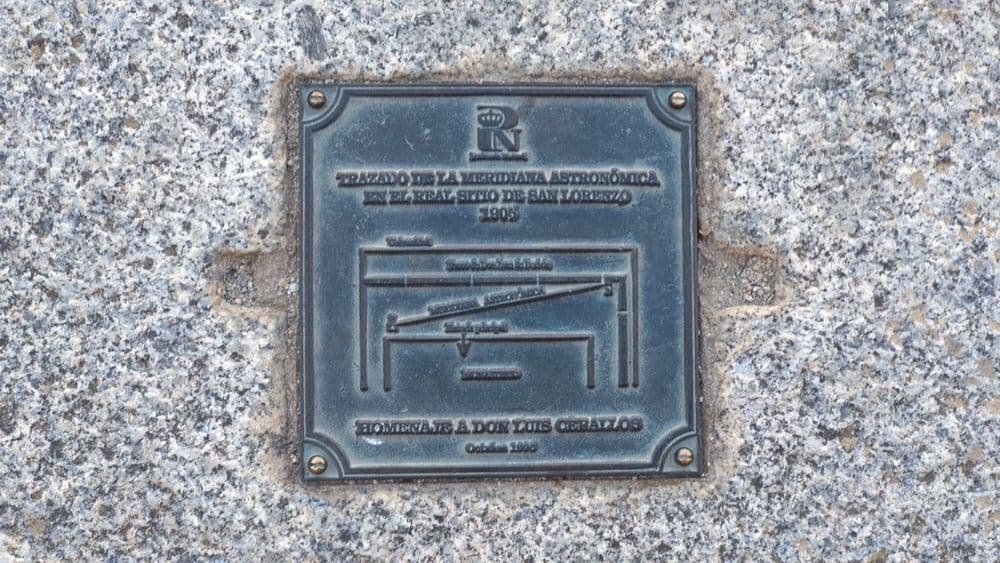
We start the route at theTourist office (1). Walking down Grimaldi Street, we come face to face with the magnificent Royal Monastery of San Lorenzo de El Escorial (1563-1584). We cross the wall that delimits the Lonja. To the right are the buildings that frame it: the First and Second Trade Houses (1587-1596), the House of the First Secretary of State or Third Trade House (1785-1797) and opposite the House of the Infante and the Queen (1770-1776). On the parapet of the Lonja wall aplaque commemorates the meridian traced by Luis Ceballos Medrano in 1905 (2)which is complemented by another located to the left of the entrance of theConvent (3). The imaginary line joining them points north and indicates that the orientation of the Royal Monastery does not exactly coincide with the cardinal points (12º northeast declination).
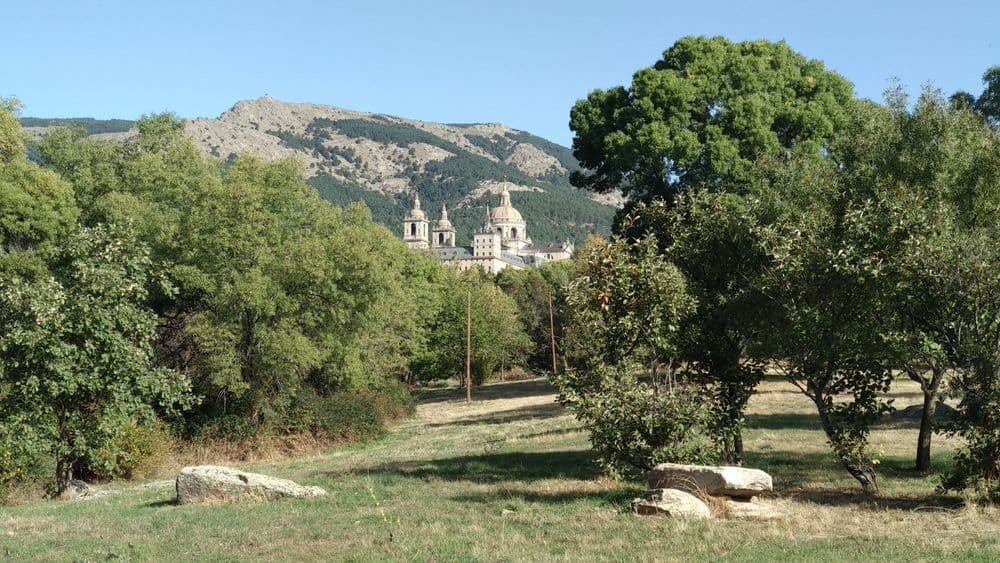
Opposite the Casa de la Compañía (1590-1597), today the Real Centro Universitario Escorial – María Cristina, it joins the Botica through a building composed ofArches (4)under which is the entrance to the Jardín de los Frailes (free access, closed Mondays). Further on aviewpoint (5)it rewards us with fantastic views of the Royal Monastery, the Garden, the Orchards and the Pond. The Madrid city skyline can also be seen on clear days.
Facing the viewpoint, abronze statue of Philip II (6), suggests visiting the Adolfo Suarez Park – RCU Escorial-María Cristina (closed Mondays), where we find aSabina de Virginia (7)and two copies ofCentenary Horse Chestnuts (8)which are Singular Trees of the Community of Madrid (hereinafter AS). We exit through the opposite door and cross Paseo Carlos III with great care. Following the alignment of Horse Chestnuts, we reach thetwo access columns (9)to the Herrería area, declared a Picturesque Landscape in 1961 along with the Pinar de Abantos.
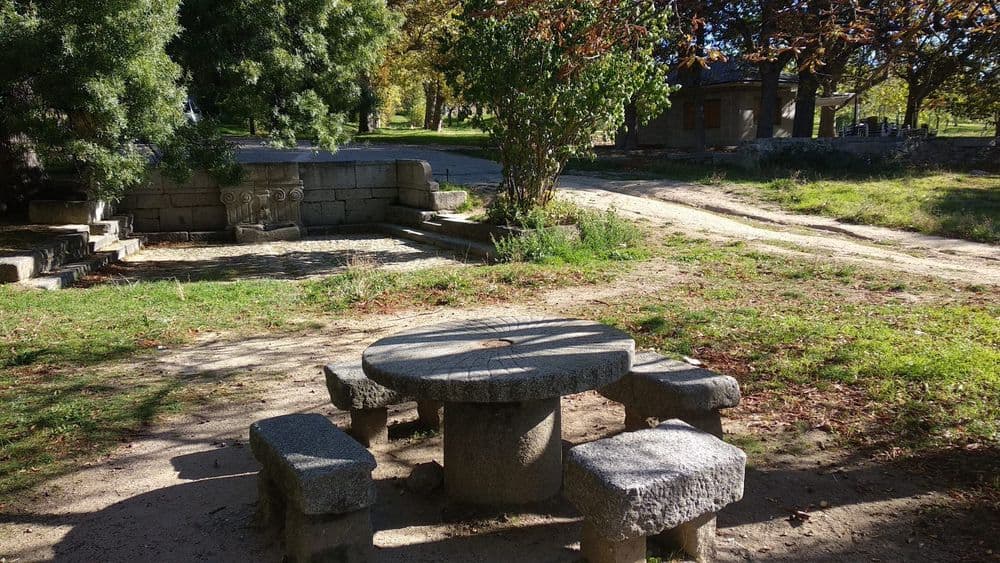
We go down the Cuesta de los Pastores and, at the first fork, continue along the path on the right which leads us to theSeminar Source (10), one of the numerous stone fountains carved below ground level that dot La Herrería. There we find a board with the representative birds and a Kiosk with a set of interpretive panels of La Herrería (visible during opening hours).
A blue arrow indicates the path leading to the beautiful specimen of theLove tree (11)which is at the intersection with the Cuesta de los Pastores, which we follow until we cross the stone bridge, from which we will see an alignment ofShade bananas (12)and to its right theReal Club de Golf La Herrería (13). Asignal (14)suggests the proximity of the Fountain of theCapones (15)and a little further on, theCruz de los Romeros (16)indicates that the Procession accompanying the Virgen de Gracia, patron saint of San Lorenzo de El Escorial, passes through here on its way to the Hermitage.
On the Bridge over theArroyo del Batán (17)we appreciate the landscape diversity of the gallery forest created along its banks, where we find poplars, willows, ashes, rosaceous plants, brambles and thorns. A fence warns that we are entering a vehicle circulation area towards a parking area. Attentive, we cross theM-505 for zebra crossing (18). The road forks, presided over by anotherCruz de los Romeros (19). We take a right. We find a diversion to the left that leads to theErmita de la Virgen de Gracia (20)and to theErmita Spring (21).In this environment, every second Sunday of September, the Romería de la Virgen de Gracia is celebrated, a Festival of National Tourist Interest since 1988, where the people of Gurrieta pay tribute to their patron saint, while dancing the rondón to the rhythm of their dulzainas.
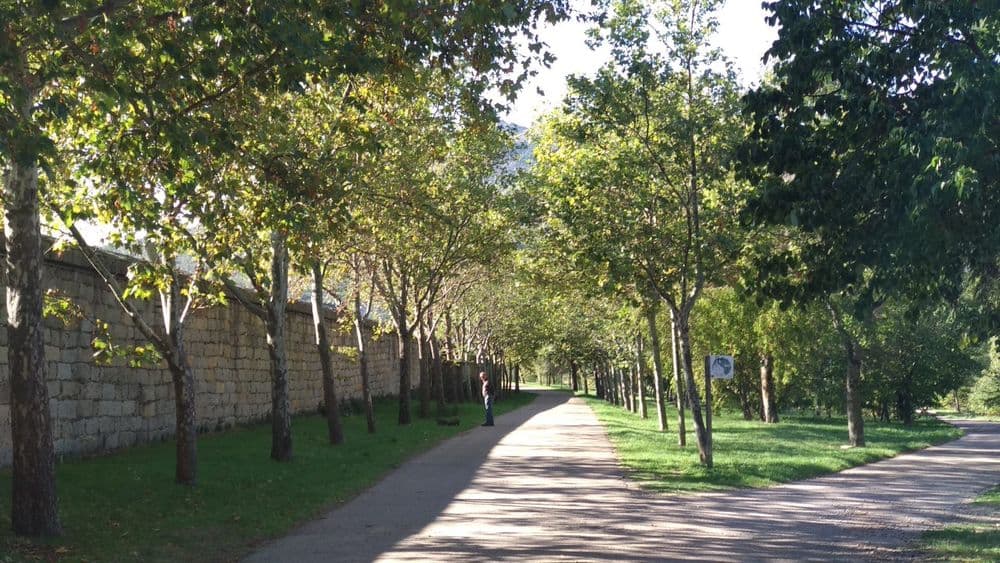
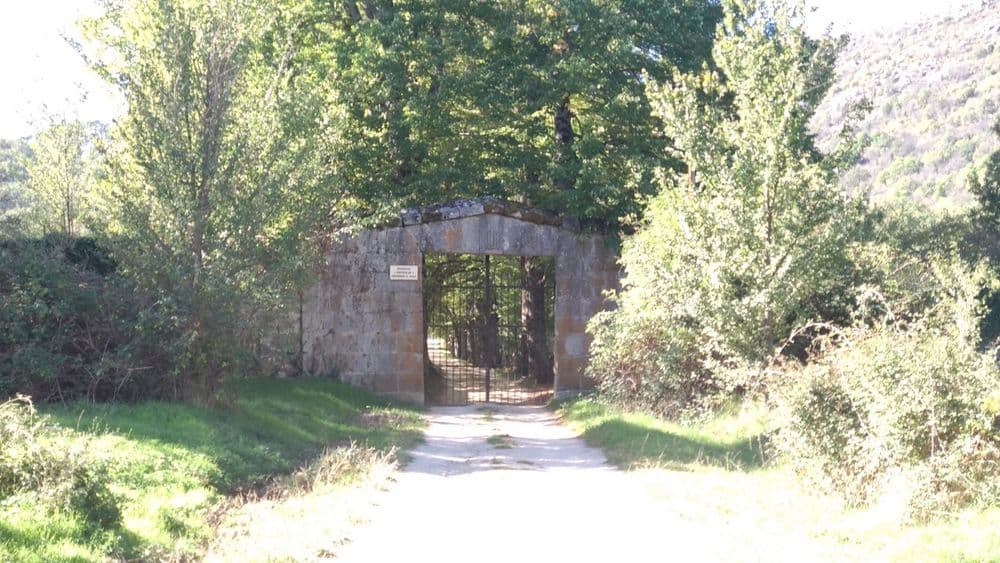
We followed the path we had come along and reached themain gate of the El Castañar estate (22), from which the tree-lined promenade that runs almost its entire length can be seen. Inside was a 13th-century church in honour of the Virgin of la Herrería, patron saint of the municipality of El Escorial, which was moved to the Church of San Bernabé at the end of the century, before the building was destroyed in the times of Philip II. We retrace our steps to thefence (23)which now remains to our left. The narrow path we took isfork (24). We take the left and begin a slight ascent parallel to the wall of El Castañar and leave behind aestate service gate (25).
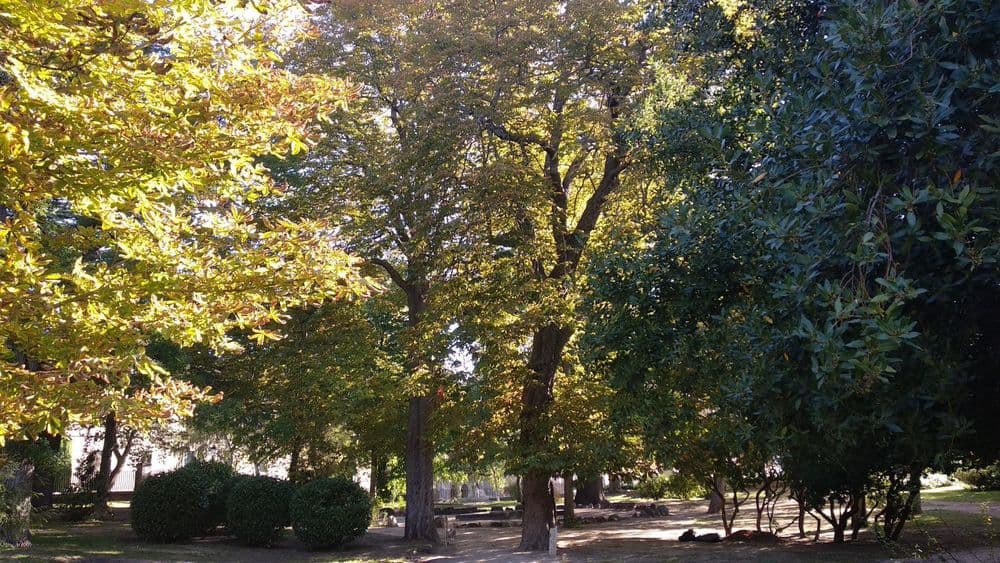
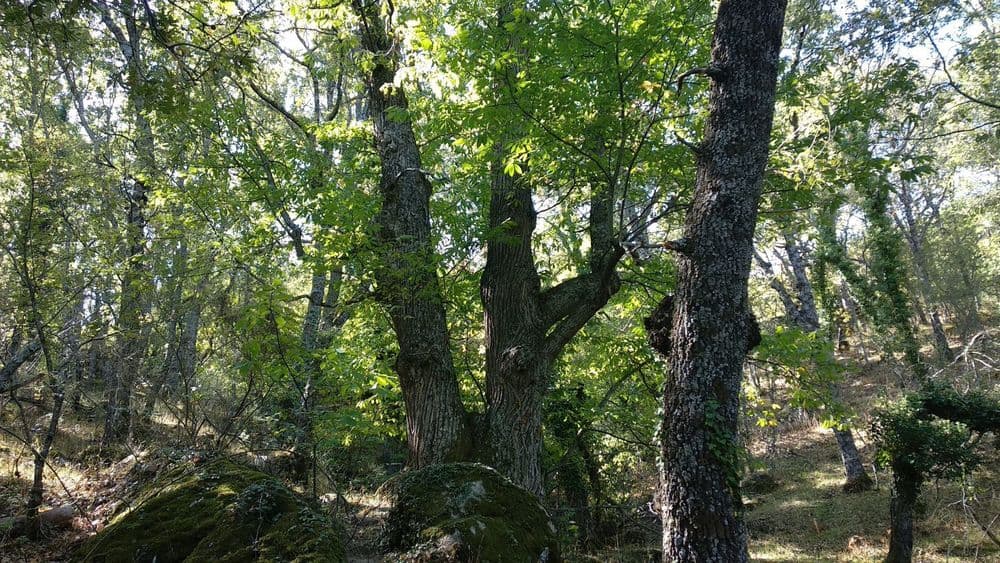
Now in thepaved track (26)we go to the left until we reach theQueen's Fountain (27), located in a fantastic chestnut grove in which stand outtwo copies of AIS (28 and 29), near the intermittent stream coming from the mountain, Montpellier maples and Pyrenean oaks. Here also begins the adapted and accessible “Ecological Path” that runs along the forest track to the Silla de Felipe II. We continue along it until aposter (30)opposite the well-knownTilo de la Mano (31), behind the stone wall of El Castañar, which is missing two of the five branches that gave it its name.
We continue and leave the fountain of the on the leftDos Hermanos (32)and theCueva del Oso (33),place to spark the imagination of the little ones.To theright a path (34)it leads us to a new fork with a fence through which we continue. From there, we see the dry stone wall that will accompany us on the right and which delimits the Historical Territory of Philip II, declared a Heritage Site (Bien de Interés Cultural) by the Community of Madrid in 2006, which covers practically all of the municipalities of San Lorenzo de El Escorial and El Escorial. We continue along the left path until the ruin of theCasa del Sordo (35), a 16th-century gamekeeper's lodge. From there, we can see the fantastic views of the surrounding El Escorial area and our next destination: thePhilip II's Chair (36), which we reach via one of the paths that end there, where, according to tradition, Philip II used to contemplate the progress of the works of the Royal Monastery and which, recently, it is suggested could be a Vetton altar.
We climbed the stone-carved steps to photograph the magnificent panoramic view and sit where it is believed Philip II appreciated the progress of the works of the Royal Monastery. Beside it, a beautifulMontpellier Maple (AIS) (37)and, beyond, a greatgranite boulderwhich remains balanced on anotherrock(38).
We descend through the thicketmelojo oak forest (39), accompanied by Montpellier maples, junipers, butcher's brooms and spurges, and we leave behind theArenitas Spring (40)and theSource of Prosperity (41). The path leads us to the Silla road which we already know. We cross the M-505 again via thezebra crossing (42). When crossing Puente del Arroyo del Batán, in thefork (43), we take a right and pass in front of theSanta María del Buen Aire Hostel (44).We take a small path that goes off to the right and after crossing a wooden footbridge we arrive atan ash (45) and Pyrenean oak grove,with shrubs such as sloes, middens, blackberries, and wild roses. To the left, off the path we spot a majesticfresno declared AIS (46). We continue until Calleja Larga. To the left we will leave aCasa del Guarda (47)and to the right a hidden tombstone that is part of the wall of theCasita del Príncipe (48).
At the end of Calleja we find theentries to the Bosquecillo del Real Monasterio (49)to the left, not accessible to the public and of the coquetaCasita del Príncipe (50)to the right with its park and court gardens. Heading towards the Royal Monastery, we stop at thesmall balcony (51)from which we appreciate the King's and Queen's Gardens, before finishing our tour.
44 paradas







Natural route through La Herrería, El Castañar and the Silla de Felipe II, a journey through forests, springs, viewpoints and historical landscapes next to the Monastery of San Lorenzo de El Escorial.