This itinerary starts from the San Lorenzo de El Escorial tourist office.
- We leave La Lonja via the Arcos de la Compaña. We will enjoy a spectacular view of the Jardín y Huertas de los Frailes and the pond presided over by a huge weeping willow. Its origin corresponds to one of the two oldest fountains in the area, that of Blasco Sancho or del Estribo, along with the current Fuente de la Reina, known then as Matalasfuentes. We are accompanied by a row of horse chestnuts.
- We continue along the Paseo de Carlos III to access La Herrería (declared a Picturesque Site in 1961 and owned by Patrimonio Nacional) through an entrance with two columns: we are at La Cuesta de los Pastores. We descend, leaving the “Zarco” Kiosk to the right and next to it, the Fuente del Seminario. Along the way, we see a specimen of a love tree (a species that presents a spectacular and early pink flowering).
- Further along, we reach the Golf Course and, opposite it, the facilities of the Sta. Mª del Buen Aire Youth Hostel. This area of La Herrería is an ash grove. We continue walking along the fence of the golf course, among majestic specimens of plane trees. Shortly before arriving at the Cruz de los Romeros, a detour can take us to the Fuente de los Capones.
- The slope descends to the Arroyo del Batán and we reach the junction with the M-505 road, which we cross with caution.
- The paved track leads directly to the Silla de Felipe II: you can take a shortcut via the paths that emerge behind the recreation area, to the left. On this same side, we leave the Fuente de la Prosperidad. To the right, the Ermita de la Virgen de Gracia appears. Beside it, a specimen of Scots pine, catalogued as a Singular Tree of the Community of Madrid. Above it is the Fuente de las Arenitas.
- We are in a magnificent melon grove dotted with cherry trees, wild pear, privet, blackthorn, hawthorn, dog-rose, blackberry, wild plum, elder, bittersweet, ivy, honeysuckle, ferns, buckthorn, hazel, wild apple… It is a good place for birdwatching.
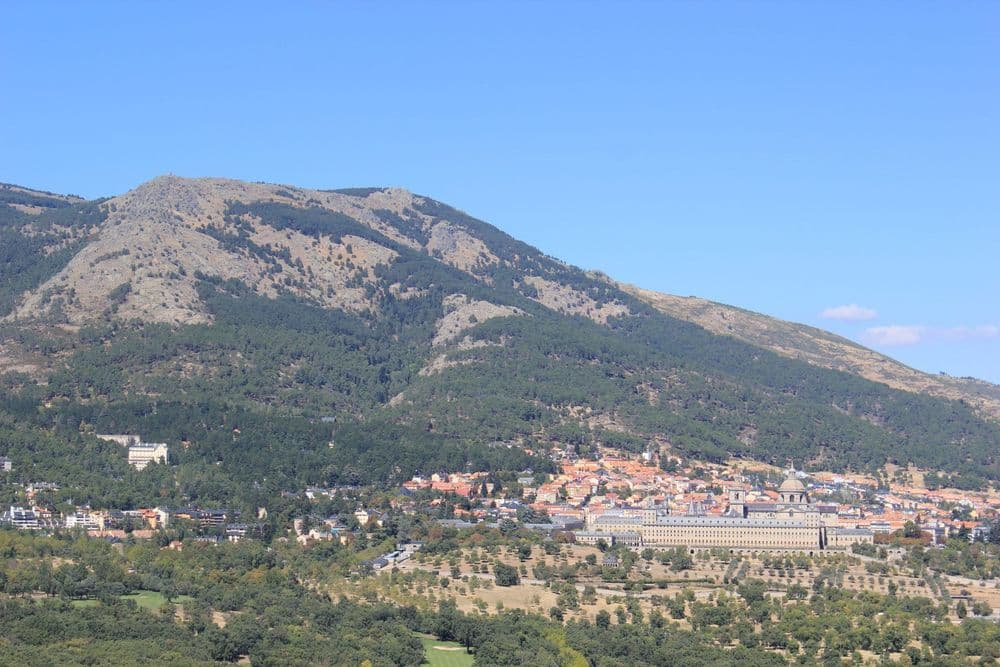
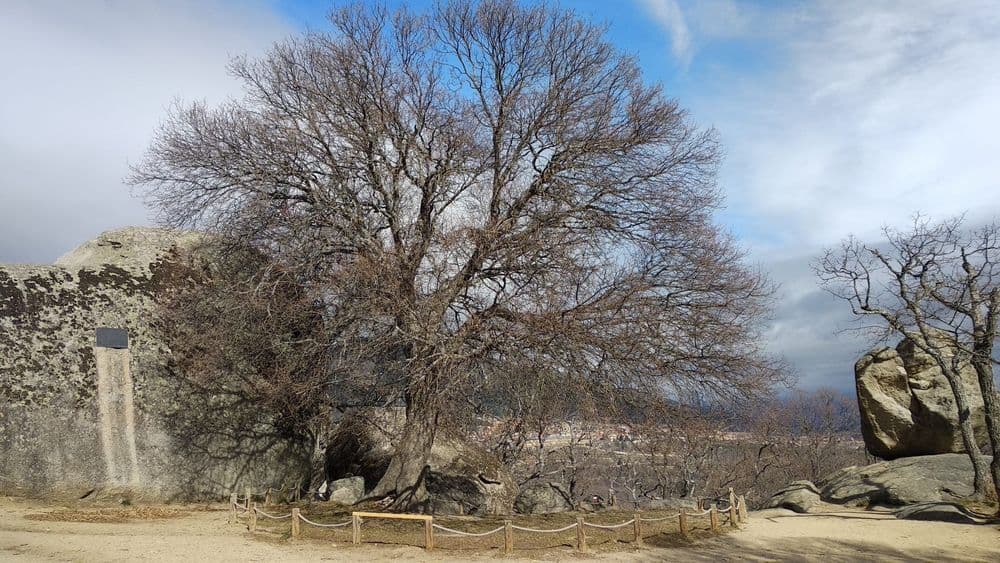
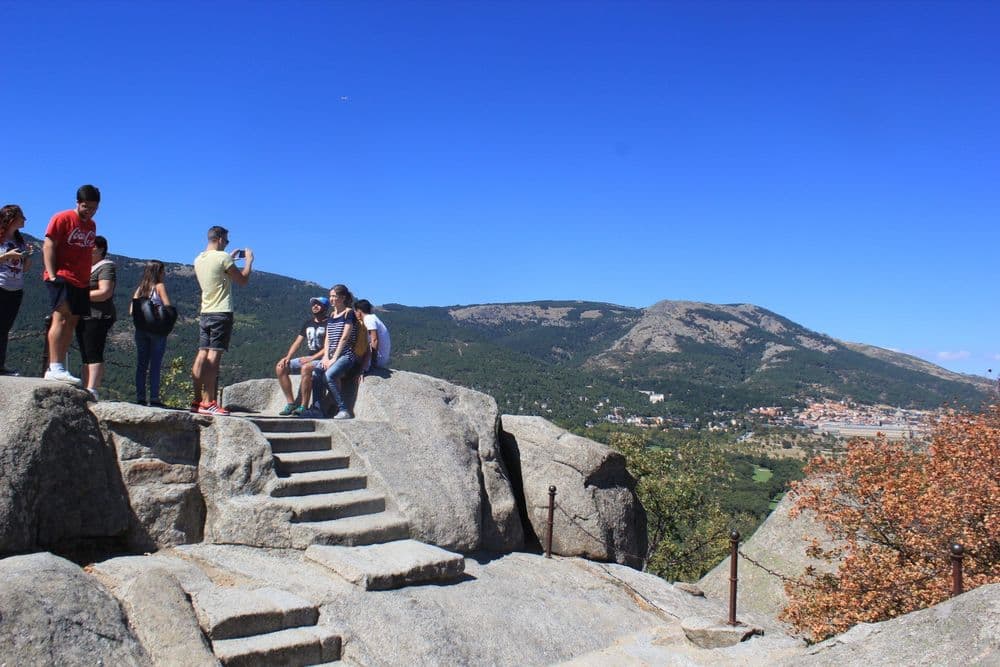
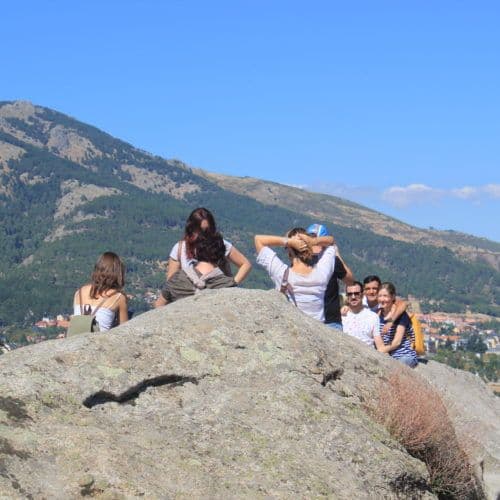
- From the Chair of Philip II, we enjoy a spectacular panoramic view. We find magnificent specimens of Montpellier maple, especially one with an arboreal habit next to the staircase carved into the rock, catalogued as a Singular Tree of the Community of Madrid. Rosy swallows are usually abundant in this section.